
The Kamogawa Food Detectives: A Serving of Hope (English)
Kamogawa Shokudo Omakase (2017)
by Hisashi Kashiwai
translated by Jesse Kirkwood
pub date: 06-Oct-2026
Putnam | G.P. Putnam’s Sons
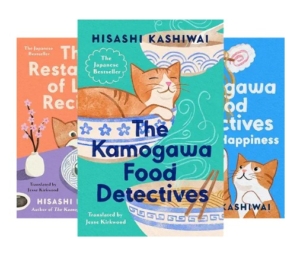
Also by this author, The Kamogawa Food Detectives, The Restaurant of Lost Recipes, Menu of Happiness

AMBER LOVE 17-AUG-2026 This review is a courtesy provided by NetGalley. To support this site and my other work, please consider being a monthly donor at Patreon.com/amberunmasked; you can also buy my books through Amazon (or ask your local retailer to order you copies). Links to Amz are affiliate links.
Publisher’s Summary:
If I hadn’t searched for the ‘flavors’ of my memories, I think I would have spent my life endlessly chasing the past . . .
Down a Kyoto alleyway, near Higashi Honganji Temple, the Kamogawa Diner attracts lost souls. The father-daughter “food detective” duo of Chef Nagare and Detective Koishi help their clientele who seek meaning in their lives by helping them access lost memories through the food of their past.
From the onigiri gifted alongside cherished promises to the ginger pork that became a memory of unrequited love, the not-too-sour chilled noodles from grandma’s house, and the macaroni gratin shared by a father and young son for the last time, there is no dish or memory too complex for father and daughter.
Welcome to another delicious mystery. The Kamogawa Diner is a tonic for the soul, and its customers will leave with a warm belly and a full heart.
Review:
I was once again thrilled when I received an approval from G.P. Putnam’s Sons through NetGalley for another installment by Hisashi Kashiwai in The Kamogawa Food Detectives series. Book four, A Serving of Hope, was translated by Jesse Kirkwood as were the other books in the series. This is the second book of the series that I’ve read. I’ll have to catch up.
Kashiwai uses the same format and successful formula in A Serving of Hope. Each chapter is an independent story broken into two parts. The chapters are named for the assignment: the dish that a client wants recreated. These can be incredible simple, yet full of memories, like fried chicken that was served on a memorable day in someone’s life. In certain instances, clients show up at the Kamogawa Diner and tell Nagare and his daughter Koishi that they aren’t sure why they have the urge to find a particular meal. The message comes through as Koishi interviews them and when they finally taste what they’re after.
The food is described in splendid detail. Nagare always serves people a full set of courses when they come for their consultation. Even clients who think they can’t eat much will devour every delectable bite before them. They notice the plates, bowls, cups, and choices of tea and saki. For a reader who doesn’t know anything about Japanese food or the significance of such things, reading a Kamogawa Food Detectives book is an education unto itself. As one of the character’s internally describes the plated meal, it gives a sense of trustworthiness. Nagare puts that level of care into each dish that people feel a safe connection, like magic. While these books do not fall into speculative genre fiction, they do offer that sense of the Universe bringing customers to precisely where they need to be to move ahead with their lives.
Giving this installment the subtitle of A Serving of Hope was naturally deliberate by Kashiwai. However, I found the previous book I read to also be filled with hope for the detective agency’s clients. When someone leaves the restaurant, they have a changed outlook on their life. The questions they thought they had were the wrong questions. Rather than looking for an answer to Why am I failing at my job?, they find out quickly that it’s the wrong job for them. They come up with a new question to steer their life like When do I make this change to follow my heart?
At the end of each investigation, readers follow Nagare and Koishi into the altar room to honor Kikuko, Nagare’s wife and Koishi’s mother. Customers who enter the diner often notice the photos of her. This deceased loved one is always a background character because she takes up so much of their hearts. Sharing emotions and infusing them into the food is what Nagare insists makes a dish worth serving. Kikuko’s character also serves as a way to connect Nagare and Koishi to some of their clients. They may have been old friends or met them on their travels. There’s isn’t much readers get to know about that time when Kikuko was alive. Kashiwai gives bite-size anecdotes that have something to do with the particular case.
There is one reference to Nagare having been a police detective in the past. This isn’t explored at all. It’s meant to show that he understands people, their motivations, their emotions, and what it is they aren’t saying during their interviews. A character doesn’t need to have been in law enforcement to know those things, but it’s an ingredient into who Nagare Kamogawa is.
I would never forget the star of the Kamogawa series book covers, Drowsy. He’s a cat that basically belongs to Nagare and Koishi in the way a street cat can belong to anyone. He knows they’ll provide him with food and a blanket. He’s not allowed inside the restaurant. He earned his name by spending most of his time sleeping contentedly. Having a cat around to judge customers is always a lovely touch.
Since each chapter can be read independently as short stories, there are some repetitions including how Drowsy got his name, the peculiar non-descript two-storey building of the restaurant, and the hallway filled with photos that goes back to Koishi’s office. They can make reading a section fly by quickly. It’s unlikely a reader would tire of Kashiwai’s details about Kyoto’s distinct culture, the food, what people are wearing, and the interesting way the Kamogawas run their business. They don’t have fees. After each client’s case is solved, Koishi hands them the banking information and instructs them to pay what they feel is reasonable when they can. It’s unclear if the diner also operates this way for regular customers who come only to eat and not for the detective agency.
Summary:
The Kamogawa Food Detectives are once again helping people get answers to their lives’ problems in A Serving of Hope by Hisashi Kashiwai. No matter how rude the customer or if they’ve done something unethical, Chef Nagare and Koishi will not refuse to help them.
Jesse Kirkwood’s translation reads easy and smooth. The format of A Serving of Hope is the same as previous books in this series which provide readers with independent stories though not considered short story collections. Each client’s case builds off different levels of specific emotions. If there’s grief it might not be for a deceased loved, though it could be; it might be loss over the life one could have had or missing someone they haven’t seen in decades. The continuous theme is about love and passion. Whether it’s romantic love or passion for what you do in life, each story is about having a connection to the heart and will not disappoint readers.
Rating: 5 stars

 Founder and Editor-in-Chief of AmberUnmasked.com and Vodka O'Clock Podcast. Author of The Farrah Wethers Mysteries, comic book short stories, prose, and non-fiction. Cosplayer and figure model.