
The Last Rhino: Combating Crimes Against Wildlife with Zone 7 Podcast

TW: Animal poaching
Panelists:
Host of the Zone 7 Podcast and Wildlife C.S.I. Sheryl “Mac” McCollum with Ed Newcomer, Former US Fish and Wildlife Service Special Agent
Photography was not allowed in this presentation.
Zone 7 podcast host, Mac McCollum made sure there tissues available for this panel. They were needed. Her interview with retired US Fish and Wildlife Service Supervisory Special Agent Ed Newcomer didn’t leave a dry eye in the room. These panelists were comfortable with each other and public speaking. The case presented made it clear that these two professionals knew their stuff.
Newcomer gave highlights of his career to enlighten people on why an area like Fish & Wildlife needs special agents and detectives. He investigated illegal trafficking of plants (vital succulents needed for the ecosystem) to a rare butterfly to megafauna like the rhinoceros.
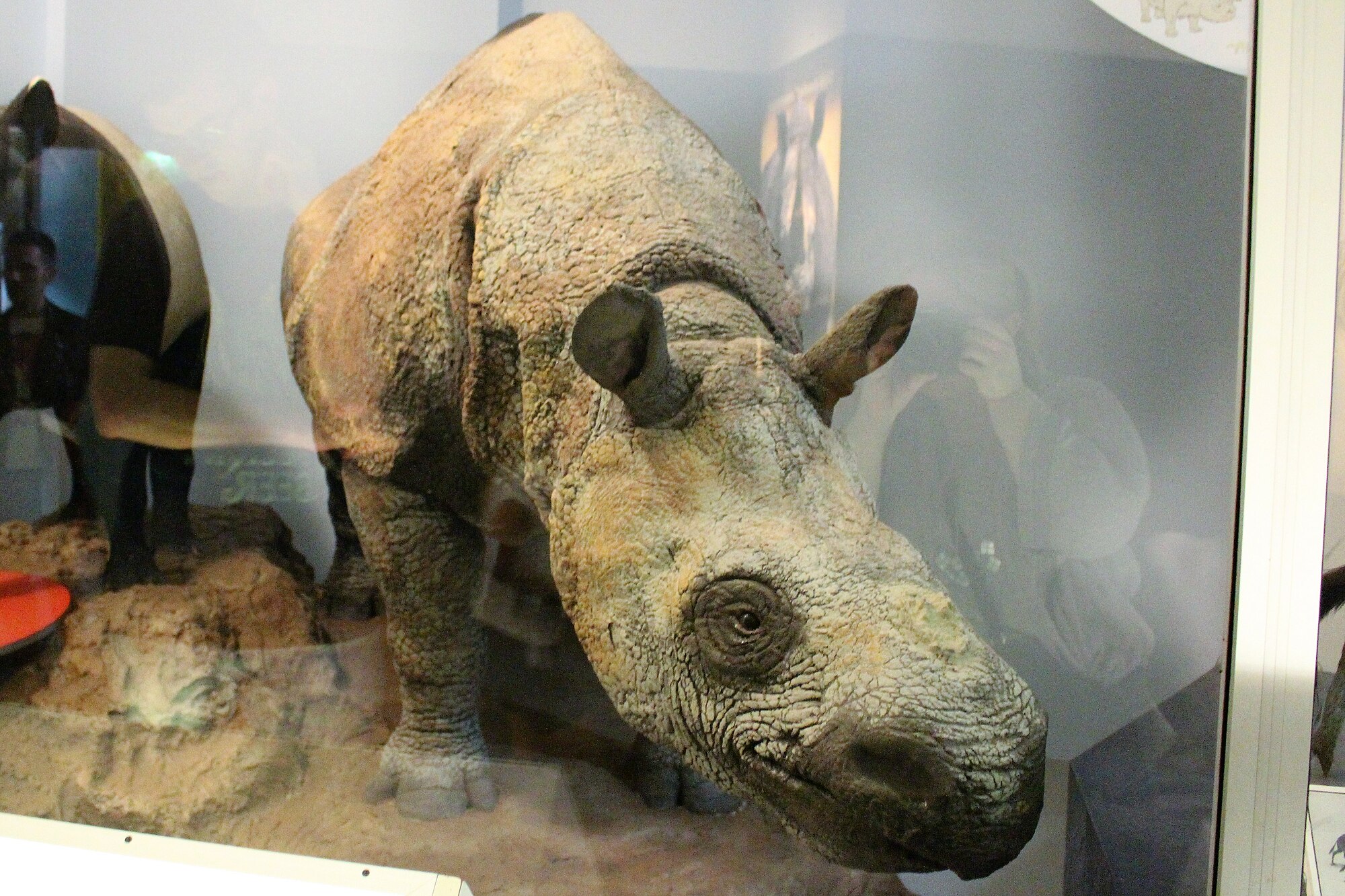
Javan rhinos are the most threatened of the five rhino species, with only around 76 individuals that live only in Ujung Kulon National Park in Java, Indonesia. —WWF
The title of this panel was The Last Rhino and it wasn’t for exaggeration. In April of 2010, Newcomer was on a team investigating the murder of Vietnam’s last Javan rhinoceros (Rhinoceros sondaicus). He was there for a real extinction event. This isn’t Hollywood, but the story deserves to be told.
| How did they know it was the last of its kind? Rhinos are generally fantastic at staying away from humans. They are surveyed and tracked by finding fecal evidence and determining how long it has been there. |
The murder was premeditated. Make no mistake. This was a murder. Inside Cat Tien National Park, this Javan rhino was singled out. The killing occurred during the Tet holiday when no one, not even the rangers, were supposed to be working or even inside that park. Yet, a dead Javan rhino body was found mutilated. Its horn gone. The local law enforcement didn’t save all of the body, only the bones and some toenails. Hearing the story was gut-wrenching. Bearing witness as Newcomer did, had to have been one of the worst sights imaginable.
Many believe that rhino horn is desired by the black market for medicinal myths. The truth is that the completely false belief in medicinal qualities isn’t the primary reason. People covet it. They want horns that are elaborately carved as status symbols. Rhino horn isn’t ivory either. It’s keratin—the same as hair and fingernails.
The rhino did not immediately die. It suffered. According to the official report:
“The examination revealed that the horn was removed after the rhinoceros died. The bullet found lodged in the front left forelimb caused considerable injury and inflammation in the leg which would have resulted in impaired locomotion for the rhinoceros. The alteration of the bones suggests that at least 2 months passed between the time the rhinoceros was shot and the time of death.”
SSA Newcomer and the team (some were from the World Wildlife Fund) examined what they could of the physical evidence and the location where the body was found. All of investigators saw the unmistakable sawing/tool marks on the skull. Yet, the official cause of death was ruled “Natural causes,” which this team knew was bullshit. They also knew that whatever they proved wouldn’t matter to the Vietnam government. They continued and went to the crime scene anyway.
Hiking up and down steep terrain in the jungle would make the average person want to give up. Animals, Newcomer explained, do not hike straight up or down. They zig-zag in order to make the incline safer and more manageable. Newcomer’s team pressed on with their direct route approach until they reached a mind-blowing vantage point of the jungle where they could visualize exactly what happened.
Something was clearly out of place. The trees and jungle foliage were disturbed in a more direct path. Based on the sides of the plants that were broken and leaning, what happened became clear to the investigators. Someone shot the rhino up high. Its injured leg couldn’t support its weight. The densely packed trees and vegetarian cracked as the last Javan rhino of Vietnam tumbled down losing more of its life and strength along the way. Its landing place was busted down bamboo creating a place of hospice where it lingered until dead. The damage of the bamboo formed the shape of the rhino laying across it when discovered. The stalks were not chopped or cut. They were snapped from the force of the rhino’s weight.
Newcomer found the bullet in the skeleton. The bullet was enough to prove that this creature was mercilessly killed. It was the caliber of bullet consistent with an AK-47 rifle. That kind of gun is only found in the military and park rangers. There was another wound discovered on the skeleton that showed this animal had been targeted and shot before. It’s speculation, but likely, that it was a park ranger who shot this rhino.
The only good news is that an NGO discovered a small population of Javan rhinos in a location that will hopefully remain a secret.
If you are curious about seeing the photographic evidence, the linked WWF report listed in my resources includes the photos and specifics of the investigation.
I was able to get in the last question before the panel closed. This time, it wasn’t a question. I was excited to have a chance at the mic in a room full of animal lovers. I told the panelists and audience about how I’ve been able to be someone outside the worlds of science and law enforcement, yet make a difference. Not even a humblebrag. Straight up brag. Because of the trailcams and adventures with Gus and Oliver, I’ve gotten photographic and physical evidence of our New Jersey ecosystem. I use Merlin ID app and iNaturalist app to confirm my sightings of least concern animals (like the white-tailed deer) to the endangered in NJ species like bobcats. If you’re familiar with my weekly cat detective stories, you’ve seen my collection of bones, photos of tracks, blurry photos of animals, photos of feces, opening owl pellets, and more. I was contacted by the NJDEP about my bobcat content. They were thrilled by my contributions on iNaturalist and urged me to use their online reporting system. I got to have a moment of pride when I told the contact that I’ve been uploading my wildlife reports for so many years, they go back to the old emailing of PDF system. Now it’s quick and easy using ArcGIS.
Resources:
WWF Report 2010, Examination of a Dead Javan Rhinoceros Cat Tien National Park, Vietnam
AUTHORS:
- Dr Ulrike Streicher, Danang, Vietnam
- Special Agent Ed Newcomer, US Fish and Wildlife Service
- Douglas McCarty, Freeland, Thailand
- Sarah Brook, WWF Vietnam Programme
- Bach Thanh Hai, Cat Tien National Park
Where to Find Help:
Every convention, CrimeCon chooses a charity to benefit from a fundraiser. At Denver’s convention, the charity selected was HigherHope.org.
Their mission: “Through our two distinct grant programs, we offer financial assistance to those affected by violent crime. Whether you’re a family seeking justice or a nonprofit organization working to create lasting change, we’re here to carefully evaluate your needs and provide meaningful support. At Higher Hope, we are committed to providing financial assistance and advocacy efforts for families affected by violent crime or the disappearance of a loved one, as well as to like-minded nonprofits. In the aftermath of such tragedies, victims and their families are often left seeking answers, guidance, and resources.
From the CrimeCon Information
About Mac McCollum:
Sheryl “Mac” McCollum is an three time nominated Emmy Award winning CSI from CSI Atlanta, National Law Enforcement Officer Hall of Fame Inductee, Director of the Cold Case Investigative Research Institute, a writer for CrimeOnLine, Forensic and Crime Scene Expert for Crime Stories with Nancy Grace, host of award winning podcast Zone 7 and a working CSI for a metro Atlanta Police Department. Sheryl is the Director of the Wildlife CSI Academy and the US Ambassador for the Wildlife Forensic Academy in South Africa.
Sheryl “Mac” McCollum has worked with criminals like famed Mafia hit man Frank Cullotta, Johnny Lee Cleary the ex Imperial Wizard of the KKK, the Flint River Killer, Alcatraz Inmate #1355 Robert Schibline and Jimmy Hoffa’s driver, The Weasel, to gain intel on how to solve certain cold cases. She has also worked side by side with notable family members such as Lana Wood, Beth Holloway, Sue Savio, Lois Duncan, Donna Pettis and Susan Levy. She not only admires them but considers them friends. She has genuinely befriended them all. For almost forty years, Sheryl has used her training and experience in criminal justice to solve some of the country’s most difficult cases.
Sheryl has reviewed, consulted and worked on thousands of criminal cases across the USA and has appears on Dateline, Nancy Grace, Dr. Oz, CSI Atlanta, Dr. Phil, Fox Nation, and Discovery ID. Some of her most famous cases include: The Boston Strangler, Natalie Wood, Kathleen Savio (Drew Peterson), Don Lewis (Tiger King), Natalee Holloway, the Missing and Murdered Children (Wayne Williams) and Tu Pac Shakur.
About Ed Newcomer:
Ed Newcomer is a well-respected law enforcement professional and lawyer who served as a Special Agent with the U.S. Fish and Wildlife Service for over 20 years before retiring in 2022.
During his career as a Special Agent, Ed worked in Los Angeles and in a variety of international posts while conducting complex investigations involving wildlife trafficking crimes. Between 2015 and 2020, Ed was based at the United States Embassies in Gaborone, Botswana and Pretoria, South Africa, where he served as the Wildlife Law Enforcement Attaché for Southern Africa.
As the senior diplomatic representative of the U.S. Fish and Wildlife Service in nine African countries, he provided investigative and enforcement assistance to African law enforcement agencies and advice to senior U.S. Government officials at U.S. embassies throughout the world. He was responsible for the conception and implementation of the U.S. Visa Ineligibility for Wildlife and Timber Traffickers — the first and only such visa restriction adopted anywhere in the world.
Prior to his Africa assignment, Ed served as the Deputy Resident Agent in Charge for the Southern California RAC District in Los Angeles, California, where he supervised criminal investigations conducted by Service agents in the Los Angeles area.
During his career, he conducted many high-profile international wildlife trafficking investigations involving every continent, including Antarctica. He is the recipient of six Law Enforcement Awards from the U.S. Attorney’s Office — an unequaled historical record among USFWS special agents.
He is a licensed attorney and, for ten years prior to joining the Service, practiced law as an Assistant Attorney General and Hearing Officer in the states of Washington and Colorado.
Ed is a member of the faculty at California State University, Dominguez Hills, where he teaches courses in criminal justice and administrative law. Since February 2025, Ed has hosted the popular podcast Nature’s Secret Service.
 Founder and Editor-in-Chief of AmberUnmasked.com and Vodka O'Clock Podcast. Author of The Farrah Wethers Mysteries, comic book short stories, prose, and non-fiction. Cosplayer and figure model.