
“More Weight” Recounts the Dark History of the Salem Witch Trials

“More Weight: A Salem Story”
By Ben Wickey
Preview:
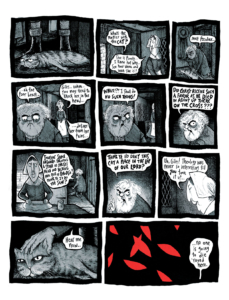
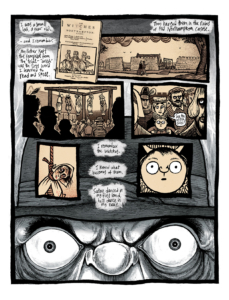
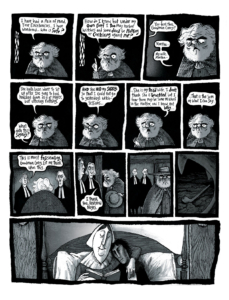
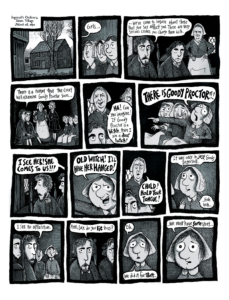
Releasing September 23, MORE WEIGHT is the debut graphic novel from Ben Wickey – an eye opening read of a horrifying series of events. Wickey has crafted a stunning work of historical fiction featuring beautiful artwork and HAND LETTERED!
Ben Wickey is a Massachusetts-born artist, writer, and animator. He is one of the contributing illustrators of Alan Moore’s The Moon and Serpent Bumper Book of Magic, the illustrator of Ki Longfellow’s The Illustrated Vivian Stanshall, and the director of several stop-motion animated short films, including the award-winning The House of the Seven Gables.

Publisher’s Summary:
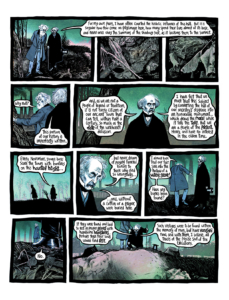
“Every word is an accusation…and every whisper kills.” This staggering graphic novel explores the infamous Salem witch trials and the long shadows they cast more than 300 years later.
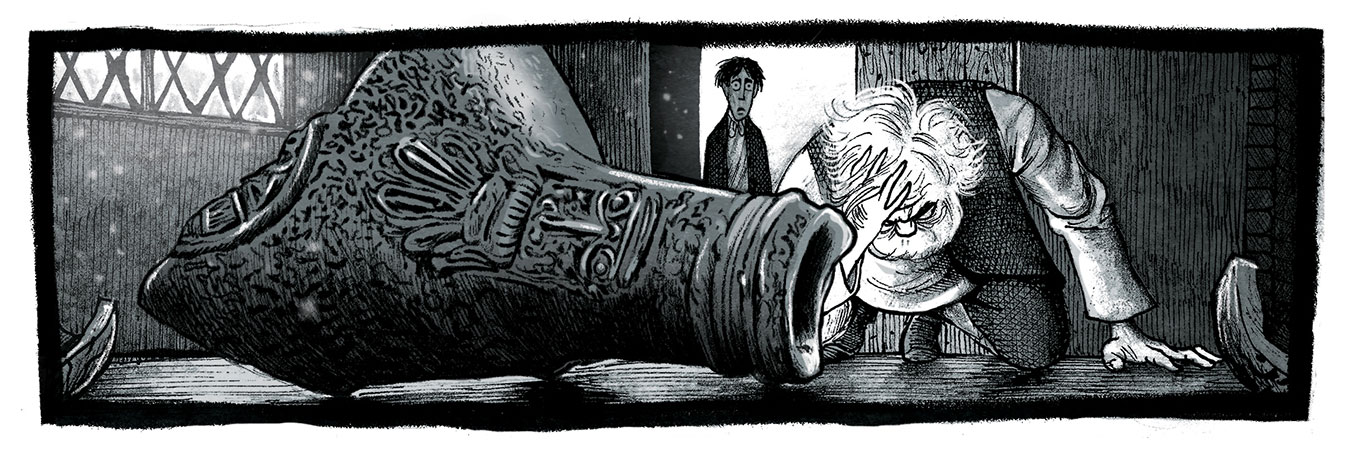
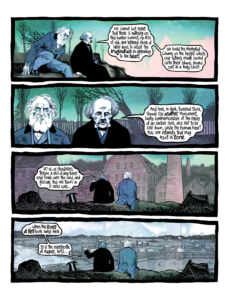
In Salem, Massachusetts, 1692 is a year of terror. When accusations of witchcraft plunge the community into paranoia and death, curmudgeonly farmer Giles Corey and his great-souled wife Martha are forced to confront their troubled pasts, fighting to hold onto their principles even at the cost of their lives. In the 1860s, famed writers Nathaniel Hawthorne and Henry Wadsworth Longfellow stroll the streets of Salem together, reflecting on their own dark connections to those wicked days. Today, graphic novelist Ben Wickey wrestles with the complex legacy of “the Witch City” and what it shows us about the best and worst of humanity.
Based on true events, set in three centuries, and hand-drawn over a decade, More Weight is a stunning visual symphony — a unique and profound inquiry into the infamous Salem witch trials and the long shadows they still cast on us all.
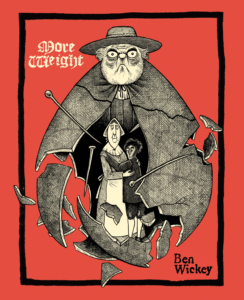
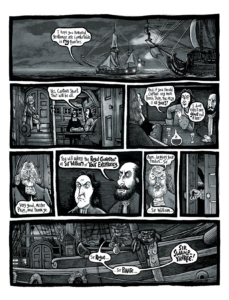
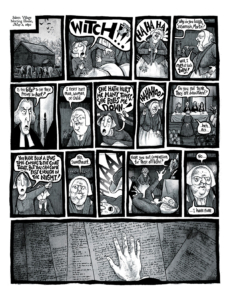
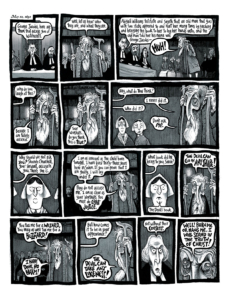
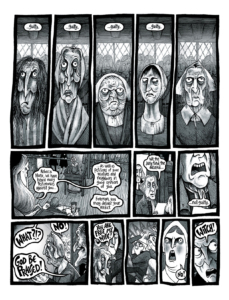

More Weight: A Salem Story
by Ben Wickey
ISBN 978-1-60309-560-0
$39.99 (US)
Review:
More Weight is an OGN ingrained with a lot of historical research about the Salem Witch Trials and Giles Corey’s terrible reputation. There’s A LOT here and not all of it makes sense. Writers (Longfellow & Hawthorne) that might be dead and one of them is definitely addicted to laudanum.
The drama and tragedies of families fighting which birthed the sport of the accusations in the first place was done well. Each character is unique visually.
It’s noted at the end of a VERY long book that the creator, Ben Wickey, is a descendant of Mary Easty, one of the accused. The book keeps on going. Wickey then takes readers into modern day Salem. It feels more like a stream of consciousness than plotted and edited. One bubble he seems to hate Salem and what it is. Then the next bubble, it seems that he accepts and loves how witchcraft has become Salem’s symbol—though he doesn’t accept that witches were/are ever real. This is particularly confounding since Wickey showed Giles Corey creating a witch bottle to control his wife, Martha.
Wickey definitely does not like Laurie Cabot, the woman who had a huge part in my witchcraft education and discovering my people. I agree, the 9 million witches burned myth is long since debunked, so why reference a book written in 1990 when she and her co-authors have produced more recent texts? However, when people correct what they can (as in, they’re still alive and interested in writing/teaching) that should be acknowledged if you’re calling out where they were once propagating myths. From one line to the next, Wickey seems accepting about the neo-pagan movement in today’s society, yet, he doesn’t give credit people like Laurie Cabot for allowing this religious freedom to be openly practiced. Instead, he flat-out blamed her for Michael Dukakis losing the presidency. She is by no means, infallible, but she deserves respect.
Wickey repeatedly returns to the “9 million burned” myth and its original creator, Margaret Murray, who published her theory back in 1921 (The Witch-Cult in Western Europe).
I congratulate Wickey on doing more research than most comic creators, but there are certainly things that could be better. The exhaustingly long text dumps inside word balloons feel like they should have been done more as a page of text with a spot illustration.
As a reader and a witch, I’m left with questions after reading this (which is fine). Why didn’t Wickey focus on Mary Easty? Why did he chose one of the only men as his subject?
It’s a confusing book, but obviously a labor of love. Wickey gets points for his portrayal of Tituba with her accurate ethnicity. He showed a lot of compassion regarding Martha Corey’s son, Ben-oni, who was biracial in a village and time when colonizers were deeply racist against the indigenous people.
Rating: 3 out of 5

 Founder and Editor-in-Chief of AmberUnmasked.com and Vodka O'Clock Podcast. Author of The Farrah Wethers Mysteries, comic book short stories, prose, and non-fiction. Cosplayer and figure model.